

Have you ever wondered why a customer might click on your ad but then vanish? What if you could lead them from that first click to a sale? Building a high-intent buyer journey is key in today’s market.
Companies like The Mix and Legend Corporation have boosted their sales. They did this by using sales funnel automation and intent data. Knowing your buyer’s journey helps you tailor your approach. This makes it more likely they’ll buy from you.
By focusing on a high-intent marketing strategy, you can make your sales process better. It becomes more efficient and effective.
Key Takeaways
- Understanding your buyer’s journey is key for conversion.
- Sales funnel automation can greatly improve sales.
- Using intent data helps tailor your approach to meet buyer needs.
- A high-intent marketing strategy streamlines the sales process.
- Companies like The Mix and Legend Corporation have seen big improvements through automation and intent data.
Understanding the High-Intent Buyer Mindset
To find high-intent buyers, you need to understand their behavior and what drives them. These buyers are ready to buy and show it through their actions and how they interact with your brand.
Characteristics of High-Intent Buyers
High-intent buyers have certain behaviors that show they’re ready to buy. Key behavioral indicators include visiting the same product pages over and over. They also engage with pricing and download product materials.
Behavioral Indicators of Purchase Readiness
These signs mean a buyer is close to making a decision. For example, looking at product comparison pages or asking for demos shows they’re serious.
Psychological Triggers That Drive Decisions
Knowing what drives buyers, like trust signals and urgency tactics, helps you match your marketing to their needs.
The Difference Between High and Low Intent Prospects
High-intent prospects are different from low-intent ones because they’re focused and clear about buying. 
Mapping the Modern Buyer’s Journey
Understanding the buyer’s journey is key for businesses to craft effective marketing plans. Today’s buyer’s journey involves many touchpoints at different stages. It’s important for companies to grasp these interactions.
Awareness Stage Touchpoints
At the awareness stage, people first learn about a product or service. They see it through social media, blog posts, and advertisements. These moments are vital in grabbing the interest of possible buyers.
Consideration Stage Interactions
When prospects reach the consideration stage, they dive deeper into the brand. They might download whitepapers, attend webinars, or read product reviews. For more details on the B2B buyer’s journey, check out this ultimate guide.
Decision Stage Behaviors
At the decision stage, prospects show clear actions. They might ask for a demo or reach out to the 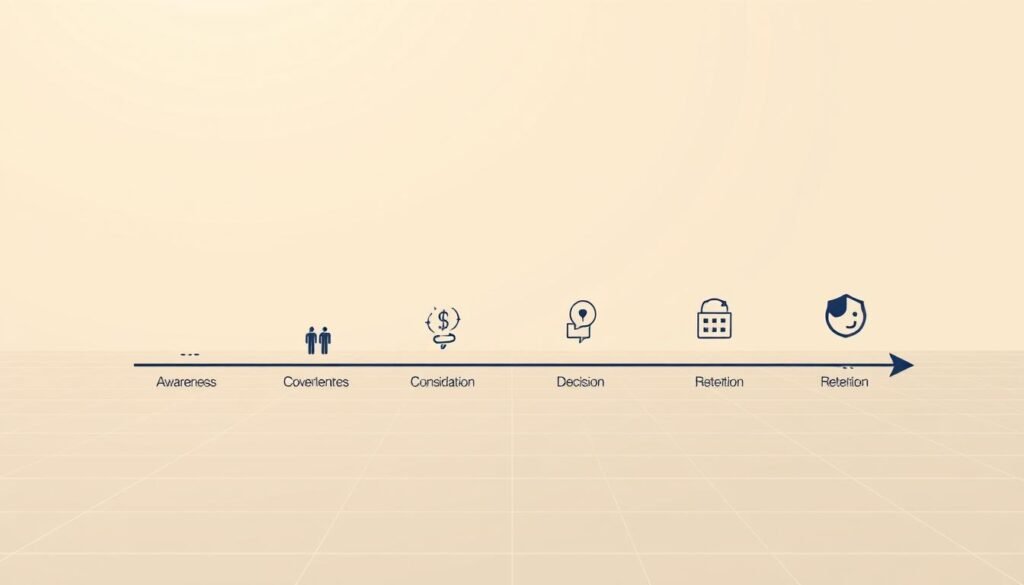
Identifying Buying Signals
Spotting buying signals is essential throughout the buyer’s journey. These can include frequent website visits or interest in pricing information. By noticing these signs, companies can adjust their approach to better meet the prospect’s needs.
Capturing First-Click Data That Predicts Intent
First-click data is key to understanding a buyer’s purchase intent. When someone clicks on your ad or content first, it shows they’re interested. This is a big step towards making a purchase. It’s important to capture and analyze this data to know how buyers behave.
Key Behavioral Metrics That Indicate Purchase Intent
Several metrics show if a buyer is ready to buy. These include how long they stay on your site, the pages they visit, and how they interact with your content. Time spent on site is a big clue, as longer visits often mean they’re more interested. Also, if they check out multiple pages or product details, they’re more likely to buy.
Setting Up Intent-Based Tracking Systems
To get first-click data right, you need to set up intent-based tracking systems. Use tools like CRM systems and marketing automation platforms to watch and analyze user actions. By tracking the right metrics, you can understand buyer intent better. Then, you can adjust your marketing strategies to fit their needs.
Using Predictive Analytics to Forecast Buyer Readiness
Predictive analytics is key in guessing when a buyer is ready to buy. By looking at past data and behavior, predictive models spot likely buyers. This lets you focus on those who are most likely to buy. You can then make your marketing campaigns more effective.
Using first-click data and predictive analytics helps a lot in predicting and guiding buyer behavior.
Creating Content That Attracts High-Intent Buyers
To attract high-intent buyers, your content must meet their specific needs. High-intent buyers are ready to buy and need content to guide their decision.
Bottom-of-Funnel Content Strategies
At the bottom of the funnel, buyers are choosing between options. Effective content at this stage includes:
Case Studies and Social Proof
Using case studies and social proof can ease concerns. It shows the value of your product or service. Real-world examples build credibility and trust with buyers.
Comparison Guides and Pricing Information
Offering detailed comparison guides and clear pricing helps buyers. It lets them see how your product compares and understand its value. This content is key for those close to making a decision.
Addressing Buyer Objections Through Content
High-intent buyers often have concerns before buying. Content that addresses these objections can help overcome these hurdles.
Implementing Trust Signals and Credibility Markers
Trust signals like customer testimonials and security badges are vital. They show your brand’s credibility and trustworthiness. Displaying these elements reassures buyers of their safe and informed choice.
Developing a High-Intent Marketing Strategy That Converts
Creating a marketing strategy for high-intent buyers means matching your marketing with their needs. This is key to getting more conversions and boosting sales. You must know where high-intent buyers go and how they interact with your brand.
Aligning Marketing Channels with Buyer Intent
To match your marketing with buyer intent, find out where high-intent buyers hang out. This could be search engines, social media, or forums specific to your industry. By focusing on these places, you can get more eyes on your brand.
Key strategies include: making your website search-friendly, creating interesting content for social media, and being active in forums to gain trust.
Budget Allocation for High-Intent Campaigns
Spending your marketing budget wisely is essential for success. Focus on channels and tactics that work well with high-intent buyers.
Consider the following: look at past data, current trends, and what your audience needs.
Measuring ROI on Intent-Based Marketing
To see how well your intent-based marketing is doing, track important KPIs. These show how well your campaigns are working.
Key Performance Indicators for Intent-Driven Campaigns
Important KPIs include: conversion rates, how long it takes to close a sale, and the cost to get a new customer. Watching these KPIs helps you see how your marketing is doing. This lets you make smart changes to improve your strategy.
Keep checking and tweaking your KPIs to stay on course and meet your marketing goals.
Optimizing Your Website for High-Intent Conversions
Turning visitors into customers is key. Tailor your website to serious buyers to boost conversions and revenue.
Landing Page Best Practices for Serious Buyers
Your landing pages need to grab serious buyers’ attention. Use clear and concise messaging, relevant and compelling content, and a prominent call-to-action (CTA). Address your customers’ needs and concerns directly.
For more tips, check out our guide on optimizing your website for maximum conversions.
Streamlining the Checkout Process
A smooth checkout process boosts conversions. Make it easy by cutting down steps. Offer a guest checkout option and clear shipping info.
Mobile Optimization for Intent-Driven Purchases
Most online searches happen on mobile. Your site must be mobile-friendly. Ensure a responsive design and fast loading speeds for mobile users.
Reducing Friction Points in the Conversion Path
Removing obstacles is key to more conversions. Simplify forms, cut down checkout steps, and provide clear product info. This improves the user experience and boosts conversions.
Implementing Personalization to Accelerate the Buyer Journey
Personalization is a powerful tool for reducing friction in the buyer journey. By tailoring your marketing efforts to individual buyers’ needs and preferences, you can significantly enhance their experience. This makes their path to purchase faster.
Dynamic Content Based on Buyer Signals
You can create dynamic content that resonates with buyers by analyzing their signals. This includes search history, purchase behavior, and engagement patterns. This way, you can present the most relevant content to each buyer, increasing the likelihood of conversion.
Account-Based Marketing Approaches
Account-based marketing (ABM) is a strategic approach that focuses on personalized marketing to specific accounts. By identifying key decision-makers within target accounts, you can craft tailored messages and content. This addresses their unique needs and pain points.
Personalized Retargeting Strategies
Personalized retargeting involves serving targeted ads to users who have previously interacted with your brand. By leveraging data on their interests and behaviors, you can create highly relevant ads. These ads re-engage buyers and nudge them closer to a purchase.
Timing and Frequency Considerations
When implementing personalized retargeting, timing and frequency are key. Overexposure can lead to fatigue, while infrequent messaging may cause buyers to lose interest. Finding the right balance is essential to keep buyers engaged.
By incorporating these personalization strategies, you can create a more streamlined and effective buyer journey. This drives conversions and boosts revenue.
Leveraging Marketing Automation for High-Intent Nurturing
Marketing automation can greatly improve lead nurturing. It automates tasks and personalizes interactions. This makes lead nurturing more efficient.
It lets companies quickly respond to lead actions. This creates a more dynamic and responsive strategy.
Trigger-Based Email Sequences
Trigger-based email sequences are a key marketing automation tool. They send targeted messages based on lead actions. This helps high-intent leads move through the sales funnel better.
By using triggers like email opens and link clicks, companies can offer a more personalized experience. This makes leads more engaged.
Automated Lead Scoring Models
Automated lead scoring models help spot high-intent leads. They score leads based on their behavior and engagement. This lets sales teams focus on the most promising leads.
By integrating lead scoring with marketing automation, companies can make their nurturing efforts more efficient. This improves conversion rates and shortens the sales cycle.
CRM Integration for Sales Alignment
CRM integration is key for aligning marketing automation with sales strategies. It ensures data exchange between marketing and sales teams. This integration helps lead nurturing efforts be more cohesive.
Sales teams can access valuable lead insights. They can also respond to high-intent leads quickly. This improves sales alignment and boosts conversion rates.
Marketing automation for high-intent nurturing streamlines lead engagement. It uses email sequences, lead scoring models, and CRM integration. This enhances sales alignment and improves conversion rates.
Bridging the Gap Between Marketing and Sales Teams
To get more conversions, it’s key to connect your marketing and sales teams. When they work together, leads move smoothly from marketing to sales.
Creating a Seamless Handoff Process
A good handoff process is vital. It makes sure leads are ready for sales. Both teams need to agree on what makes a lead ready for sales.
Shared Metrics and KPIs
Shared goals and metrics unite marketing and sales. They track things like revenue growth and conversion rates together.
Collaborative Approach to High-Intent Prospects
Working together is key for nurturing leads. This means regular inter-team meetings and joint planning sessions.
Service Level Agreements Between Teams
SLAs set clear expectations between teams. For example, sales must follow up within 24 hours after getting a lead from marketing.
Using these strategies can greatly improve how your teams work together. This leads to better conversion of leads.
Conclusion: Building a Sustainable High-Intent Conversion Engine
You now know how key a high-intent conversion engine is for lasting marketing success. By using the strategies from this article, you can build a sustainable marketing strategy. This strategy will attract and convert buyers who are ready to buy.
A high-intent conversion engine works best when you really get to know your audience. It also needs you to be ready to change as their needs do. Using data and analytics helps you make your marketing better and boost your conversion rates.
To make a lasting high-intent conversion engine, focus on making the buyer journey smooth. Guide prospects from first awareness to a closed deal. Make sure your marketing channels match what buyers are looking for. Use personalization and automation to speed up the buyer journey.
By sticking to these ideas, you can create a marketing engine that brings in more revenue and keeps you competitive. As you keep improving, you’ll get closer to a high-intent conversion engine that brings lasting success.